The WW1

Seaplane Station

World War 1
Why Tide Mills?
The Station
Life at the station
Food for thought
A woman's war?
Flying a seaplane
War in the sky
Very Important Pigeons
Crash!
The Seaplane Station closes

World War 1

WW1, commonly known at the time as the “Great War”, started in 1914 and ended in 1918, just over 100 years ago.

It is among the deadliest conflicts in human history, with a total of about 40 MILLION casualties – roughly 20 million deaths and another 20 million wounded. Almost the same number of civilians and soldiers were killed.

At the time, it was thought to be ‘the war to end all wars’.

Question Why do you think WW1 is sometimes called the “Great War”?
Did you know?

Hover over the cards below to find out more about World War 1

Big explosions on the battlefields in France could sometimes be heard in England

12 million letters were delivered to the frontline every week

The youngest British soldier in WW1 was just 12 years old.

Question If WW1 had started now, would you have been old enough to join the army?
Tide Mills Position in relation to Britain, France and the English Channel

Why Tide Mills for a Seaplane Station?

In 1917, Germany (one of the countries Britain was at war with) announced unrestricted submarine warfare. German submarines were called U-Boats and they were deadly.

Britain relied on big ships to transport ammunition and supplies for the war from Newhaven in England to Dieppe in France, but the U-Boats were sinking them with torpedoes. This was bad for the British.

The supply ships needed protecting, so a large seaplane station was built at Tide Mills, next to the port at Newhaven. This meant that the seaplanes could escort the ships, keeping a look out for U-Boats below the waves!

Question Submarines were sometimes called “metal coffins” – why do you think that was?

The Seaplane Station

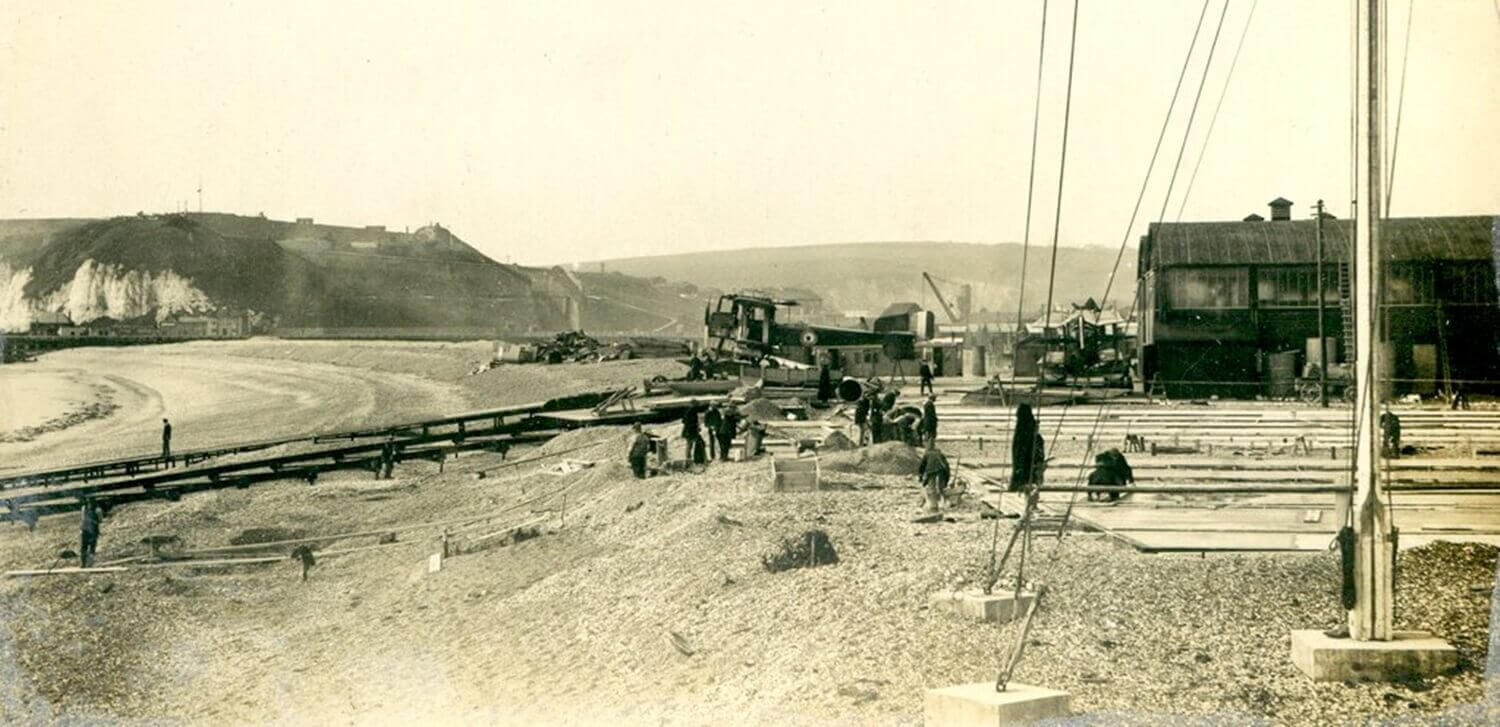
On the western beach at Tide Mills (nearest Newhaven), a massive shed with huge sliding doors was built on a big concrete standing to store the seaplanes. Another bigger shed was built later to mend the damaged planes. If stacked on top of each other, they would have been about as big as the Mill at Tide Mills (which had been pulled down in 1901).

A big wooden slipway was built to get the planes down to the sea and pull them up again, but it washed away in a storm so two more were built from concrete!

Old railway carriages were used as offices and crew rooms, and there were about 8 or 9 planes stationed at Tide Mills.

SeaplaneStationDraft

Old railway carriages were used as offices and crew rooms

Two large sheds were built to store the seaplanes at the base. You can still see the metal runners for the doors at Tide Mills!

About 8 or 9 seaplanes were based at the station

The seaplanes would have been dragged up and down the beach to get into and out of the water, where they would take off and land

A larger hanger space was built later to provide space for carrying out maintenance and repairs to the planes

Newhaven is in this direction

The Village of Tide Mills and the town of Seaford are in this direction

Where did all the new people live?

When fully in operation there were about 194 staff at the Seaplane Station. That was more than twice as many people as were living in the Village at Tide Mills at the time!

All these extra people needed somewhere to live, so they built wooden huts on stilts behind the seaplane sheds. Some of the staff also lived in local accommodation in Newhaven, whilst many of the more senior officers stayed in the Village at Tide Mills.

The officers mess (where they would eat, drink and party) was also in the Village, which meant the village was buzzing with life. Listen to what Hilda Baker, one of the residents of Tide Mills, said.

“It was the seaplane base and that made life very interesting, because they would run little concerts and different things and we would go and we got to know them all so, so intimately really, being in a small community”.

Young woman avatar
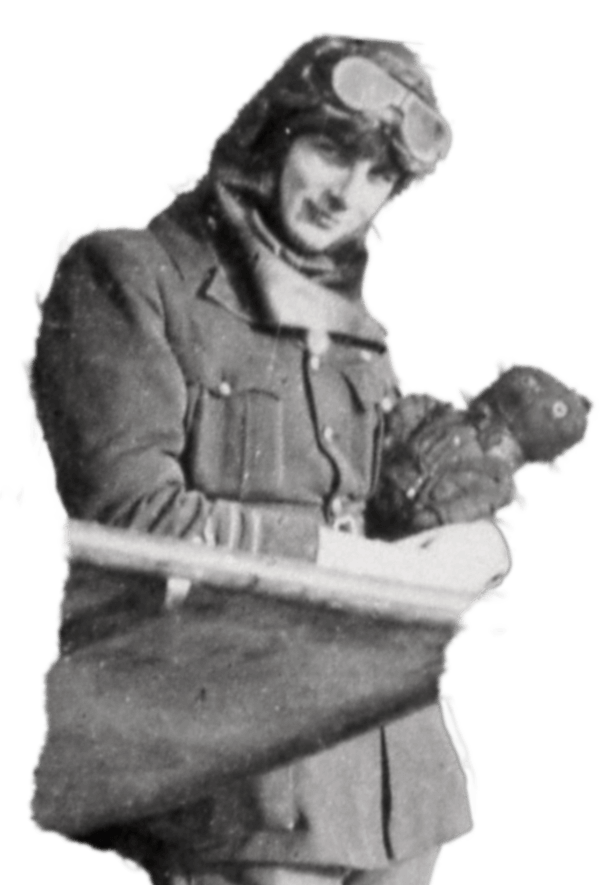
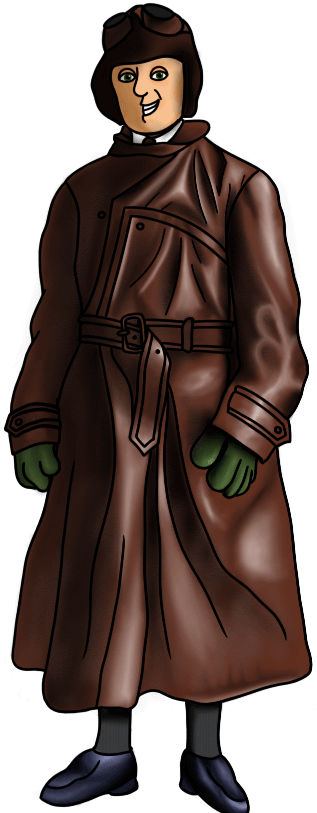
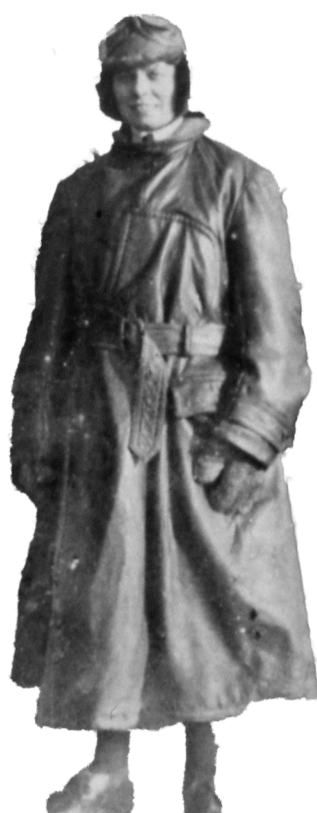
Pilot Lt Ackery Original photo of Pilot Lt Ackery

Food for thought

Another reason the Officers stayed in Tide Mills is that they got their food ration from a Canadian army base in Seaford (to the eastern side of Tide Mills) and the food was top notch. The pilots who were 18 or under received extra rations, because they were still classed as children!

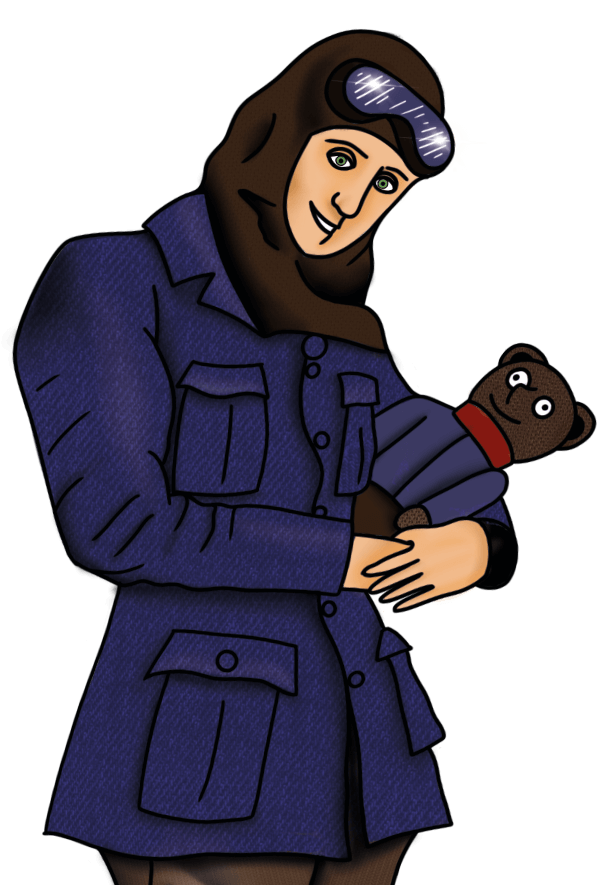
Pilot 2nd Lt Ackery (pictured), just 18 (still classed as a child, so extra rations for him!) said:

Not only were the galley staff 1st class but we drew rations from the Canadian supply base where standards were above normal!

A woman's war?

Most of the staff at the Seaplane Station were men, but there were 17 women in uniform and 17 household staff. Most of the women in uniform were office workers – short-hand typists earned the most, whilst the household staff earned the least (although they had the longest hours!).

Some women could have also worked as Pigeon Keepers or as Seamstresses, repairing the canvas wings of the seaplanes.

Question Why do you think so few of the staff at the Seaplane Station were women?

Flying a Seaplane

A seaplane is like a normal plane but with two big floats instead of wheels so it can take off and land on water. The seaplanes that flew from Tide Mills had a large engine and propeller in front of the pilot. They were made of wood, canvas and not much else!

The planes had a crew of two men – a pilot and an observer – and there wasn’t much room inside. The pilot flew the plane and the observer had a big machine gun and looked for other enemy planes and submarines.

The seaplanes could only take off when the weather was right. If the sea was too calm or too rough, they couldn’t fly.

A Short-184 Seaplane
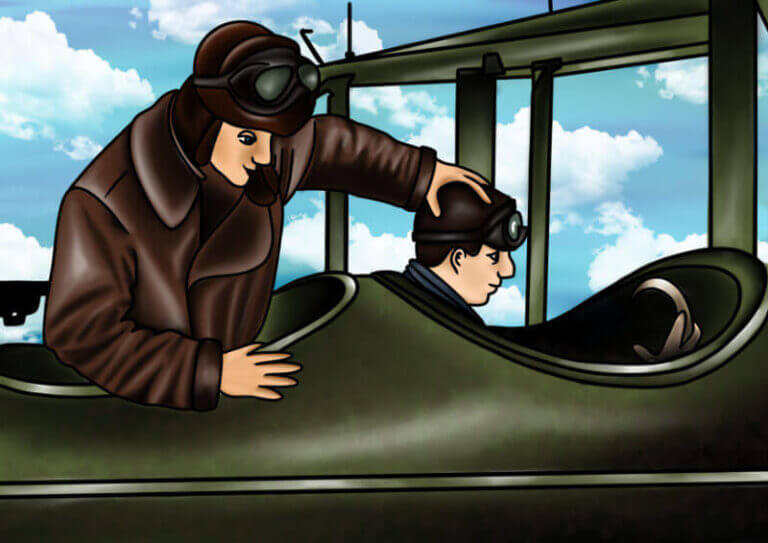
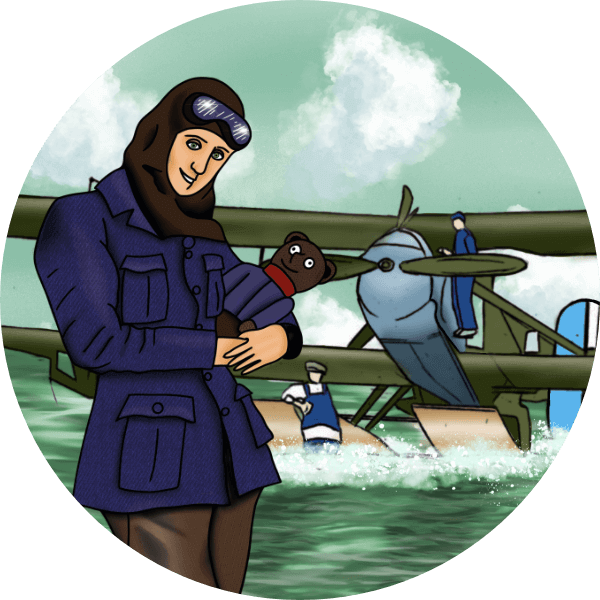
Illustration of a seaplane observer directing the pilot with a hand on his head

Illustration of Pilot Lt Ackery and Observer Lt Dangerfield in the cockpit of a seaplane, based on a historical photo

From the cockpit, the pilot couldn’t see where he was going, or hear the observer because it was so noisy. Instead, the observer would move the pilot’s head to tell him where to go. This was meant to be gentle, but often wasn’t. Listen to what Lt Ackery wrote in his diary:

“the indicating signals were so violent my head was forced hard left or right with such violence I could only maintain track through the corners of my eyes”

Question Would you have felt safe flying one of the Seaplanes? Would you have rather been a pilot or an observer?
ActivityCan you make a paper aeroplane? Find some different designs and experiment to see which flies the farthest.

War in the sky

The role of the seaplanes was to spot enemy U-Boats. A seaplane could carry one big bomb (51kg) and two smaller bombs (23kg) to drop onto any U-boats they found (but only one was ever hit by a seaplane from Tide Mills!).

As well as a big machine gun for shooting at other planes, the observer carried a loaded revolver and a flare gun for signaling.

VIPs (very important pigeons)

Every seaplane took off with two homing pigeons on board that would find their way back to the seaplane station if something went wrong or if the plane’s radio failed.

There was a knack to releasing the pigeons so they didn’t hit the plane and die. The observer (the second person in the plane) had to cover the birds’ wings and throw them hard downwards.

During the war there were severe food shortages and there was a real possibility of pigeons being shot down for a free meal, so it was quickly made illegal to shoot the pigeons!

Crash!

The first flight of a powered aeroplane took place in 1903, only 11 years before the outbreak of WW1, so it’s no surprise that there were a number of crashes around the seaplane station!

There were a total of three deaths from the crews based at Tide Mills:

Pilot Lt. John Frederick Raymond Kitchin (19 years old) and Observer 2nd Lt. George Cole (26 years old) died on 21st June 1918 when their plane crashed into the breakwater at Newhaven shortly after take-off.

Less than a month later on 16th July 1918, Pilot Lt. John Edward Greenwell (23 years old) died when his plane lost height and crashed into the sluice gates of the Tidal Mill.

“It seemed as though he would make it, as we breathed a sigh of relief. But he crashed into the brickwork of the Tide Mills sluices, accompanied by that horrific sound of splintering wood and ripping fabric, followed by the total silence that we early pilots will never forget.” 

Observer ObserverHistorical

Seaplane observer Lieutenant Bernard Dangerfield, based at Newhaven Seaplane Station at Tide Mills

The Seaplane Station Closes

After the war finished the Seaplane Station was officially closed in May 1919. All the soldiers and staff moved away.

The smaller of the seaplane sheds was auctioned off and taken to East Quay in Newhaven to be a wine warehouse. It burnt down in the 1960’s.

The larger shed was used to manufacture the concrete piles which replaced the rotting wooden ones at the East Pier in Newhaven (you can still see one today on the beach). The shed was finally relocated to Wimbledon, where it was used to store railway equipment.

It still survives and is now a Grade II Listing building, home to Firecracker Works, a prop and set-building company.

The Seaplane Station at Tide Mills brought a new lease of life to the village during WW1 and helped protect ships from enemy U-Boats

Explore Tide Mills
Choose an area on the map to explore...
  • Seaplane Station
  • The Mill
  • Seaplane Station
  • Chailey Heritage Marine Hospital
  • The Village
  • The Stables
  • Marine Hospital
As you explore
Look out for...
These labels will help you find your way around as you explore the Tide Mills Project website!
Questions
Questions to answer and think about
Activities
Fun things to make, do and try at home
Evidence
Historical sources that tell us about the past
Learn More
Delve deeper into a topic to learn more!
Plus
Click on the map icon to choose a new area to explore
Choose the menu icon to navigate to another part of our website

Success

Thanks for signing up! Keep your eye out for exciting news and opportunities to get involved coming soon…

Skip to content